

America Made in Virginia
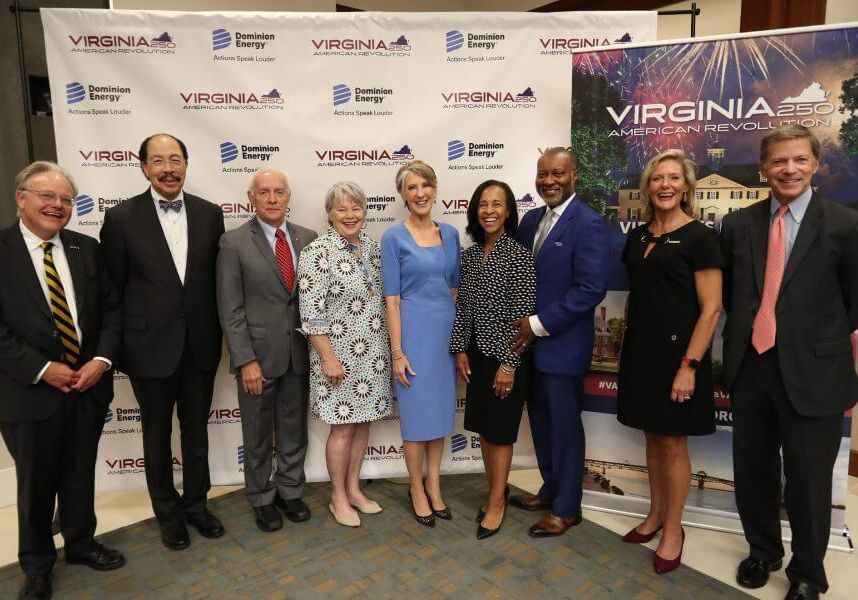
The Fauquier Chamber of Commerce is proud to be a Commemorative Partner of VA250—Virginia’s American Revolution 250 Commission. Of the thirteen original colonies, none played as fundamental a role as Virginia in the formation of our country. From the ideas that inspired it, to the battlefields that decided it, there is simply no America without it. As we mark 250 years of Independence, now is the perfect time for you to reconnect with your country in the place that made it possible. Check out VA250.org for more information.
Established by the General Assembly in 2020, VA250 serves to commemorate the 250th anniversary of the American Revolution, the Revolutionary War, and the Independence of the United States in the Commonwealth of Virginia. From its founding ideals to its leading figures, more of what made America happen, happened here in Virginia. Which makes Virginia the ideal place to learn about our nation’s beginnings, no matter what state you call home. VA250 invites you to come reconnect with your country, in the place that made it possible.
Show Off Your Patriotism

Gates Flag & Banner Company, Inc. is a leading choice for custom banners, flags, and trade show products. They provide the quality designs you need to promote a cause, showcase your pride, advertise your business, promote an event, or honor veterans. Click the logo to see all available products and offerings.

Looking for some VA250 swag? Well, look no longer. As a VA250 Commemorative Partner, we have access to branded material at discounted prices for our members.
Contact the Chamber at 540-347-4414 or mailbox@fauquierchamber.org for more information and to place your order.
History
The Declaration of Independence stands as an enduring beacon in American history, resonating with universal principles that have ignited inspiration worldwide.
On July 4, 1776, the Continental Congress adopted the Declaration of Independence, announcing to the world that 13 North American colonies had separated from Great Britain. In formalizing the separation, the colonial representatives articulated the causes of a revolution that had been underway for more than a year and would take many more years to consummate.
As President Abraham Lincoln observed, the Declaration of Independence declared “essential truths applicable to all people and at all times.” These truths include the principle that all people are created equal and endowed by their Creator with the rights of life, liberty, and the pursuit of happiness; the principle that governments are created to protect these natural rights; and the principle that governments ultimately are accountable to the people.
After the Declaration, it would take the American revolutionaries five long years to outlast the powerful British military and another six years to fashion an enduring Constitutional charter. Yet, out of the fraught events of our founding commenced our great, perpetual project: to form a more perfect union in which the Declaration’s universal promise gains ever more universal acceptance and application.
As Dr. Martin Luther King, Jr., declared in an Independence Day address in 1965, “Very seldom, if ever, in the history of the world has a socio-political document expressed in such profound, eloquent, and unequivocal language, the dignity and the worth of human personality,” However, as Dr. King also noted, too often have we failed to practice the democratic principles we so proudly proclaim. Indeed, the nation conceived in liberty and dedicated to the proposition that all men were created equal also was conceived in slavery.
No generation – not the revolutionary generation, and not any since – has fulfilled the Declaration’s promise. Yet, for nearly 250 years, we have been ennobled by the pursuit, strengthened by the struggle, and inspired by the progress. Over time the United States has woven principles of equality and justice into our laws and become the greatest example for liberty and opportunity in human history. The solid philosophical and legal foundation laid by the bold visionaries of the Revolutionary Era remains the bedrock upon which we continue to build.
The Declaration of Independence is more than a static parchment; it is a living document that continues to guide us on our journey to form a more perfect union. It is a document that reminds us of our ideals and challenges us to live up to them. In moments of adversity, it kindles hope for a brighter future.